Showing posts with label Technology. Show all posts

Wednesday, April 03, 2024

Porsche Air-Cooled Engine: How it Works


The basics of how air-cooled engines work as oppposed to water-cooled are pretty simple: air-cooled must keep cool air flowing over the motor to keep it at normal operating temperature, since it has no radiator or coolant as water-cooled motors do.

But how, exactly, do they do that? And where does heat for the passenger compartment come from?

Here’s how.


Wednesday, February 28, 2024

Nice Work Guys

Technology Not Always Reliable, As It Turns Out

Maybe the FBI was just getting in some practice at targeting innocent people…


Thursday, September 29, 2022

Body Language is Often More Important Than the Words Coming Out of Our Mouths


And ladies and gentlemen, who better to illustrate it than one of the people I’ve learned to not trust at all, Bill Gates!


This “Charisma on Command” channel is pretty interesting and talks a lot about charisma, body language, persuasion, etc. 

In the video the host has to give a big disclaimer towards the end about how we shouldn’t “otherize” people who are socially awkward because it’s not fair to people are are just socially awkward and not evil sociopaths.

And that’s true. Tons of well-meaning, normal people can be socially awkward, especially when nervous like on TV or in other public settings they’re not used to. 

But evil sociopaths can be socially awkward too, and there’s something weird about both Gates and Zuckerberg that goes far beyond social awkwardness, based on their inventions and public statements. In fact a lot of Technology and Silicon Valley types are weird people. And they advocate for weird, anti-social, anti-family, anti-freedom ideas.

It’s more than okay to otherize them, because their inventions otherize and isolate us, and actively divide us, and monetize all of that, all day, every day.


Sunday, May 08, 2022

Tunnel Under the River? Sure, Why Not?


The early leaders of Chicago took on their Civil Engineering challenges with gusto, raising the city 6-10’ to alllow installation of a sewer system in the 1860-70s and digging a vast network of tunnels under downtown streets to move goods between buildings and businesses more efficiently by avoiding gridlocked city traffic.

But wait, there’s more.

They also drilled tunnels under the Chicago River to relieve traffic issues when the drawbridges were up, which was often.


The tunnels proved ineffective and were eventually closed due to how steep and dark they were, but the fact that they tried it at all tells us a lot. 

Related posts:

Monday, May 02, 2022

Amazing 19th Century Engineering


Chicago was home to an incredible number of amazing engineering feats in the mid- to late-1800s.

The city was settled on low-lying flat ground at the shores of Lake Michigan — a swamp, essentially — so as a result muddy streets and unsanitary conditions quickly became a huge problem, and a cholera outbreak in 1845 killed 6% of the population. 

Clearly the city could not grow further without major improvements. 

They needed a sewer system to handle draining away both sewage and surface water — but in a swamp, gravity is your enemy, not your friend. 

The sewer system had to be above the current streets. So they raised the streets, the buildings, all of it. Over about 20 years, starting in 1858.


They raised an entire downtown city block, several feet, all at once, in four days, while people were conducting business inside the buildings. In the 1860s.

Earlier post about the large underground tunnel network, largely forgotten until 1992 when the river above started draining into it and flooded many downtown buildings.

Sunday, January 23, 2022

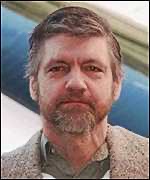
This Week in 1998: Ted Kaczynski aka “The Unabomber” Pleads Guilty


The basic details via history.com:

Born in 1942, Kaczynski attended Harvard University and received a PhD in mathematics from the University of Michigan. He worked as an assistant mathematics professor at the University of California at Berkeley, but abruptly quit in 1969. In the early 1970s, Kaczynski began living as a recluse in western Montana, in a 10-by-12 foot cabin without heat, electricity or running water. From this isolated location, he began the bombing campaign that would kill three people and injure more than 20 others.

Harvard, when getting into that school still meant something. PhD in Math from Michigan. Assistant Math Professor at Berkeley. All by age 27. 

Then he chucked it all and moved to a 10x12 cabin in Montana with no heat, electricity or plumbing.

Where did the “Unabomber” name come from?

The primary targets were universities, but he also placed a bomb on an American Airlines flight in 1979 and sent one to the home of the president of United Airlines in 1980. After federal investigators set up the UNABOM Task Force (the name came from the words “university and airline bombing”), the media dubbed the culprit the “Unabomber.”

His manifesto makes for some interesting reading, especially when one considers (a) he possessed a brilliant, technical, analytical mind, and (b) he wrote it in 1995, well before the Internet and technology were big factors in the lives of “regular people”.

Wikipedia summarizes it as follows.

The manifesto argues against accepting individual technological advancements as purely positive without accounting for their overall effect, which includes the fall of small-scale living, and the rise of uninhabitable cities. While originally regarded as a thoughtful critique of modern society, with roots in the work of academic authors such as Jacques Ellul, Desmond Morris, and Martin Seligman, Kaczynski's 1996 trial polarised public opinion around the essay, as his court-appointed lawyers tried to justify their insanity defense around characterizing the manifesto as the work of a madman, and the prosecution lawyers rested their case on it being produced by a lucid mind. […] 

At 35,000 words, Industrial Society and Its Future lays very detailed blame on technology for destroying human-scale communities. Kaczynski contends that the Industrial Revolution harmed the human race by developing into a sociopolitical order that subjugates human needs beneath its own. This system, he wrote, destroys nature and suppresses individual freedom. In short, humans adapt to machines rather than vice versa, resulting in a society hostile to human potential.

Kaczynski indicts technological progress with the destruction of small human communities and rise of uninhabitable cities controlled by an unaccountable state. He contends that this relentless technological progress will not dissipate on its own because individual technological advancements are seen as good despite the sum effects of this progress. Kaczynski describes modern society as defending this order against dissent, in which individuals are adjusted to fit the system and those outside it are seen as bad. This tendency, he says, gives rise to expansive police powers, mind-numbing mass media, and indiscriminate promotion of drugs. He criticizes both big government and big business as the ineluctable result of industrialization, and holds scientists and "technophiles" responsible for recklessly pursuing power through technological advancements.

Destruction of small human communities … rise of unihabitable cities controlled by an unaccountable state … expansive police powers, mind-numbing mass media, indiscriminate promotion of drugs … recklessly pursuing power through technological advancements … 

Crazy or no, that is a big list of prescient observations of the world around him, from 1995, well before the rise of the Internet and social media. And he actually started writing it in 1971, 24 years prior. 

The full text of the manifesto, called “Industrial Society and Its Future” is here

Informed opinions are better than the other kind, and I would encourage all to read it for yourself, and keep separate in your mind the essay itself from the deeds he justified with it.

A prison psychiatrist diagnosed him paranoid schizophrenic, and I won’t question that, but nevertheless it appears Kaczynski was onto something many years before the rest of us. Dismiss it at your own peril.

Tuesday, July 27, 2021

Physics vs. Electric Cars

Why Gas Engines Are Far From Dead - Biggest EV Problems


Electric car technology is cool and always improving, and has good applications in some situations, but before electric cars can be considered a true scalable solution for the mass market, several practical engineering and physical world issues remain to be resolved. 

And he didn’t even get into the electricity generation part, which introduces other issues with cost and supply. 


New technology can replace old technology of course — but it has to be better in some major way, rather than more expensive, less energy dense, and less practical.